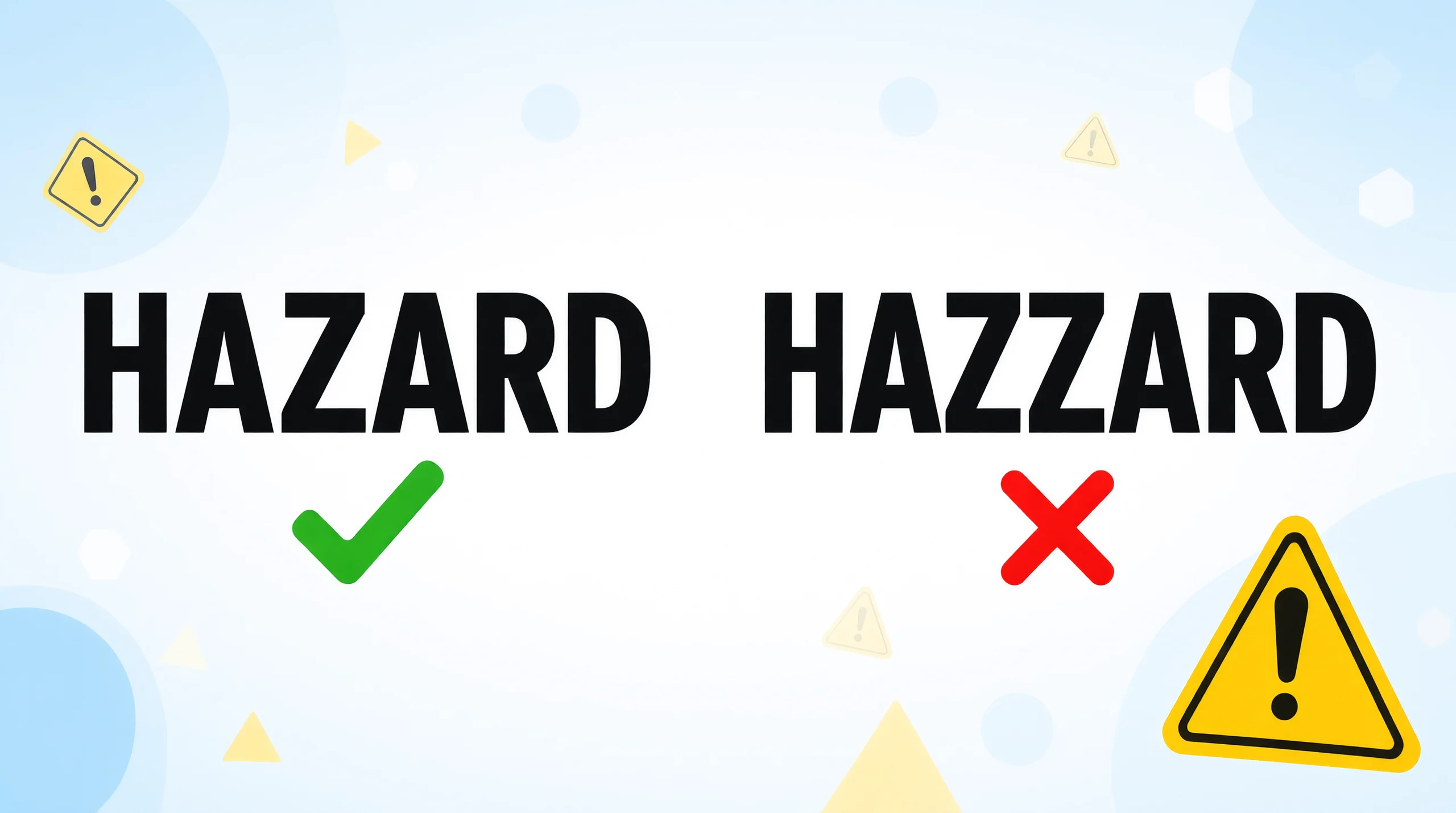
English spelling can be confusing, especially when two words look almost identical. One small spelling difference can make a word correct or incorrect. Hazard vs Hazzard is a common example because both forms appear in searches, writing, and everyday communication.
If you are wondering if to write hazard or hazzard, the answer is simple: hazard is the correct standard English spelling when referring to danger, risk, or something that can cause harm. Hazzard is generally a misspelling of this word, although it can appear as a surname or proper name.
Understanding the difference will help you avoid spelling mistakes in school assignments, professional documents, emails, and everyday writing. In this guide, you will learn what each spelling means, how to use the correct word, and how to remember it easily through practical examples.
Quick Answer: Hazard vs Hazzard
Hazard is the correct spelling of the English noun meaning danger, risk, or a possible source of harm. Hazzard is not the standard spelling of this common word. Use hazard when discussing safety risks, dangerous situations, workplace dangers, or potential harm.
Why Do People Confuse Hazard and Hazzard?
People often confuse these spellings because they look and sound almost identical.
There are several reasons behind this confusion:
- Similar pronunciation: Both forms may be pronounced the same way.
- Double-letter confusion: Some English words use double consonants, which can make hazzard look believable.
- Typing mistakes: People sometimes accidentally type an extra Z.
- Unfamiliar spelling: Learners may not know that hazard contains only one Z.
- Proper names: The spelling Hazzard sometimes appears in names, which can create confusion.
The easiest way to avoid this mistake is to remember that the standard English word for danger has only one Z.
1. Hazard: Meaning, Definition, and Examples
Hazard is the correct standard English word. It refers to something that may cause injury, damage, danger, or harm.
It is commonly used in conversations about health, workplace safety, environmental protection, and everyday risks.
Meaning of Hazard
As a noun, hazard means:
- A source of danger or risk.
- Something that can cause injury or damage.
- A situation that creates a possibility of harm.
- A potential threat to health, safety, or property.
Examples:
- Wet floors are a slipping hazard.
- Smoking is a serious health hazard.
- The broken electrical wire created a fire hazard.
- Driving in heavy fog can be a major hazard.
- Construction workers must identify every potential hazard.
Is Hazard a Noun or a Verb?
Hazard can function as both a noun and a verb.
As a noun:
It refers to something dangerous or risky.
Example: The chemicals are a health hazard.
As a verb:
It means to suggest something, often without being certain, or to risk something.
Example: I would hazard a guess that she is already home.
2. Hazzard: Meaning and Correct Usage
Hazzard is not the standard spelling of the common English word meaning danger or risk.
If you are writing about safety, accidents, threats, or dangerous situations, you should use hazard, not hazzard.
However, Hazzard can appear as a proper name, such as a family surname or fictional name.
Examples of Hazzard as a Name
- Hazzard may be used as a person’s surname.
- The Dukes of Hazzard is the title of a television series.
- Mr. Hazzard is the name of a fictional character.
Remember that proper names can have spellings that differ from ordinary dictionary words.
Important: If you mean danger or risk, always write hazard with one Z.
Hazard vs Hazzard: Comparison Table
| Feature | Hazard | Hazzard |
| Spelling | Correct | Incorrect for the common word |
| Meaning | Danger or risk | No standard common-word meaning |
| Part of speech | Noun and verb | Proper-name usage |
| Z letters | One Z | Two Zs |
| Dictionary usage | Standard English word | Not standard for danger |
| Example | A fire hazard | The Dukes of Hazzard |
| Everyday writing | Correct choice | Avoid for danger |
When to Use Hazard or Hazzard
Knowing when to use each spelling makes your writing clearer and more accurate.
When to Use Hazard
Use hazard when discussing:
- Workplace safety risks.
- Health and medical dangers.
- Environmental threats.
- Road and traffic dangers.
- Dangerous chemicals or substances.
- Situations that may cause injury or damage.
Examples:
- The factory has several safety hazards.
- Air pollution is an environmental hazard.
- The icy road presents a serious driving hazard.
When to Use Hazzard
Use Hazzard only when it is part of an actual proper name or an intentionally chosen spelling.
Examples:
- The Dukes of Hazzard is a popular television title.
- Hazzard is the family’s surname.
Do not use Hazzard as a replacement for hazard in ordinary English writing.
10+ Examples of Hazard vs Hazzard in Sentences
Here are practical examples showing the correct spelling in everyday situations.
| Incorrect or special form | Correct sentence or usage |
| Hazzard at work | The hazard at work must be removed. |
| Fire hazzard | A fire hazard can destroy property. |
| Health hazzard | Smoking is a serious health hazard. |
| Road hazzard | The fallen tree is a road hazard. |
| Safety hazzard | Workers reported a safety hazard. |
| Chemical hazzard | The chemical hazard requires attention. |
| Environmental hazzard | Plastic pollution is an environmental hazard. |
| Electrical hazzard | Exposed wires create an electrical hazard. |
| Biological hazzard | The laboratory identified a biological hazard. |
| Potential hazzard | Every potential hazard should be inspected. |
Here are additional examples using hazard correctly:
11. Poor lighting can become a safety hazard.
12. The warning sign alerts visitors to the hazard.
13. Heavy rain creates a hazard for drivers.
14. Children should stay away from hazardous materials.
15. The company introduced new rules to reduce workplace hazards.
Common Mistakes to Avoid
Even experienced English writers sometimes make spelling mistakes. Here are some common errors involving hazard.
1. Adding an extra Z
Incorrect: The broken machine is a hazzard.
Correct: The broken machine is a hazard.
2. Using Hazzard in professional writing
Incorrect: Workers must report every workplace hazzard.
Correct: Workers must report every workplace hazard.
3. Confusing Hazard with Hazardous
Hazard is a noun or verb, while hazardous is an adjective.
Examples:
- The chemical is a hazard.
- The chemical is hazardous.
4. Forgetting the correct spelling in compound phrases
Incorrect: Fire hazzard warning.
Correct: Fire hazard warning.
5. Treating proper names as ordinary vocabulary
Hazzard may be correct in a surname or title, but that does not make it the correct spelling for the word meaning danger.
Memory Trick: How to Remember Hazard
A simple memory trick can help you remember the correct spelling.
Hazard = Harm + One Z
Think of the word hazard whenever you see something that can cause harm or danger.
Remember these points:
- Hazard has one Z.
- Hazzard has two Zs.
- The standard word for danger is hazard.
- Use Hazzard only when copying a proper name with that spelling.
You can also repeat this simple sentence:
“One Z in hazard means danger; two Zs are not standard.”
American vs British English: Hazard or Hazzard?
There is no spelling difference between American and British English for the word hazard.
Both varieties use the same spelling:
- American English: Hazard
- British English: Hazard
The word has the same basic meaning in both varieties of English.
For example:
- American: The wet floor is a safety hazard.
- British: The wet floor is a safety hazard.
Neither American nor British English uses hazzard as the standard spelling for danger.
Similar Words to Hazard
Learning related vocabulary can help you express danger and risk more clearly.
| Word | Simple meaning | Example |
| Danger | Possibility of harm | The road is full of danger. |
| Risk | Chance of something bad happening | There is a risk of injury. |
| Threat | Something that may cause harm | Pollution is a threat to health. |
| Peril | Serious danger | The climbers were in peril. |
| Menace | A source of danger | The storm became a menace. |
| Jeopardy | A situation involving risk | His health was in jeopardy. |
| Hazardous | Dangerous or risky | The substance is hazardous. |
| Unsafe | Not safe | The building is unsafe. |
| Threatening | Showing signs of danger | Dark clouds looked threatening. |
| Risky | Involving possible danger | Driving too fast is risky. |
Final Verdict: Which Spelling Should You Use?
The correct spelling is hazard when you are talking about danger, risk, or something that could cause harm.
Hazzard is not the standard spelling of this common English word. It is appropriate only when used as a proper name or in a specific title.
For schoolwork, professional writing, examinations, and everyday communication, choose hazard.
FAQs:
1. Is it hazard or hazzard?
Hazard is the correct spelling of the English word meaning danger or risk. Hazzard is a misspelling when used with this meaning.
2. What does hazard mean?
Hazard means something that can cause danger, injury, damage, or harm. For example, an exposed electrical wire is a potential hazard.
3. Is hazzard ever a correct word?
Hazzard can be correct as a proper name, surname, or part of a title. However, it is not the standard spelling of the ordinary word for danger.
4. Is hazard a noun or a verb?
Hazard can be both a noun and a verb. As a noun, it means danger or risk. As a verb, it can mean to suggest something uncertainly or take a risk.
5. What is the plural of hazard?
The plural of hazard is hazards. For example: Workers must identify all workplace hazards before starting their jobs.
6. What is the adjective form of hazard?
The adjective form is hazardous, which means dangerous or involving risk.
Example: The factory stores hazardous chemicals.
7. Is hazard spelled the same in American and British English?
Yes. Both American and British English use hazard with one Z. There is no regional spelling difference.
Remember This
- Hazard = Correct spelling for danger or risk.
- Hazzard = Not the standard spelling of the common word.
- Hazards = Plural form of hazard.
- Hazardous = Adjective meaning dangerous.
Whenever you write about something dangerous, remember to use hazard with just one Z.
Conclusion
Understanding the difference between hazard and hazzard is simple once you learn the correct spelling. Hazard is the standard English word used to describe danger, risk, or something that may cause harm. It is commonly used in workplace safety, health, environmental discussions, and everyday communication.
Although Hazzard may appear in surnames and proper titles, it should not replace hazard in ordinary writing. Remember that the correct word for danger contains only one Z. Practicing this small spelling difference will help you write more clearly, confidently, and accurately.