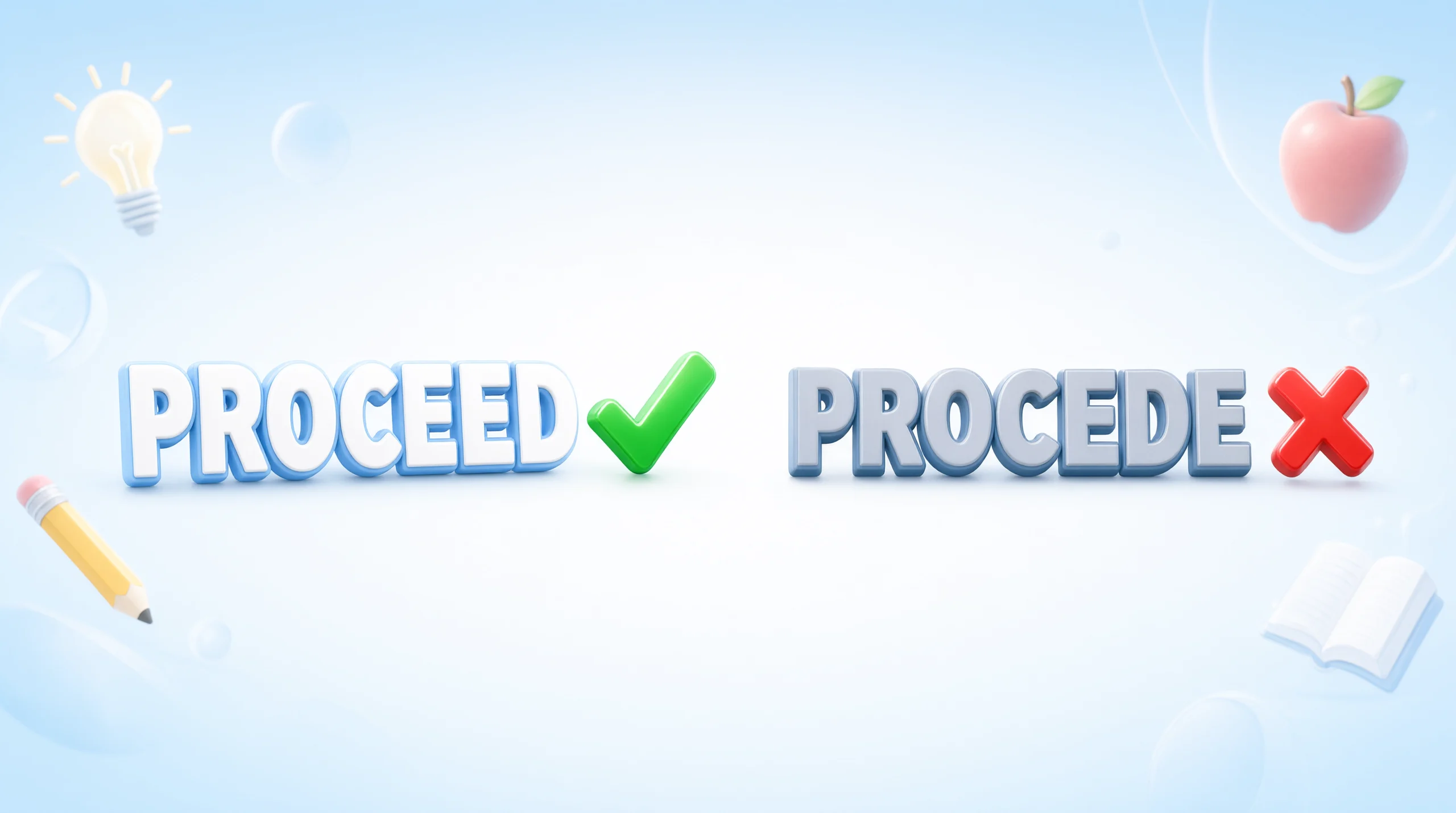
Choosing between proceed vs procede can be confusing, especially when two spellings look and sound almost identical. If you are writing an email, completing a school assignment, or preparing a professional document, using the correct spelling matters.
The good news is that only one of these spellings is correct in standard English. Proceed is the correct spelling, while procedе is a common misspelling. The word proceed means to continue, move forward, or take the next step in an activity or process. It is commonly used in everyday conversations, business communication, academic writing, and formal instructions.
Understanding the difference will help you avoid spelling mistakes and communicate more confidently. In this guide, you will learn what proceed means, why procede is incorrect, when to use the correct word, and how to remember its spelling through simple examples.
Quick Answer
Proceed is the correct English spelling. It means to continue, move forward, or take the next step. Procede is incorrect and is not recognized as a standard English spelling. For example: “Please proceed with your application.” Always use proceed in formal and informal writing.
Why Do People Confuse Proceed and Procede?
People often confuse these two spellings because they have similar sounds and differ by only one letter.
There are several reasons for this confusion:
- Similar pronunciation: Both spellings may appear to sound alike when spoken.
- Spelling patterns: English has many words ending in different letter combinations that produce similar sounds.
- Typing mistakes: People sometimes replace the second “e” with another vowel when typing quickly.
- Unfamiliar vocabulary: Some learners may not know the correct spelling of proceed.
Remember that pronunciation does not always make English spelling obvious. Learning the correct written form is the easiest way to avoid this mistake.
What Does Proceed Mean?
Proceed is a verb that means to continue doing something, move forward, or begin the next stage of an activity.
It can describe physical movement, progress in a task, or continuing with a particular plan.
Examples:
- Please proceed to the next room.
- We can proceed with the project tomorrow.
- The teacher asked the students to proceed with the exercise.
- You may proceed after receiving permission.
Synonyms of proceed:
- Continue
- Advance
- Progress
- Move forward
- Carry on
- Go ahead
Proceed is commonly used in professional, educational, and everyday situations.
What Does Procede Mean?
Procede is an incorrect spelling of the English word proceed. It does not have an accepted standard meaning in modern English.
Writers sometimes use procede because they mistakenly believe it follows a familiar spelling pattern. However, dictionaries recognize proceed, not procede, as the correct spelling.
Incorrect: We will procede with the meeting.
Correct: We will proceed with the meeting.
If you are writing an email, report, essay, or message, always choose proceed.
Proceed vs Procede: Key Differences
| Feature | Proceed | Procede |
| Correct spelling | Yes | No |
| Part of speech | Verb | Incorrect spelling |
| Meaning | To continue or move forward | No standard English meaning |
| Usage | Standard English | Misspelling |
| Formal writing | Acceptable | Incorrect |
| Example | Please proceed carefully. | Incorrect spelling |
The main difference is simple: proceed is the correct word, while procede is a spelling mistake.
When Should You Use Each?
When to Use Proceed
Use proceed whenever you want to express the idea of continuing, advancing, or moving to the next step.
Common situations include:
- Instructions: Please proceed to the registration desk.
- Business communication: We will proceed with the agreement.
- Education: Students should proceed to the next question.
- Travel: Passengers may proceed to the boarding gate.
- Projects: The team decided to proceed with the plan.
When to Use Procede
You should not use procede in standard English writing.
If you see this spelling in an essay, email, article, or professional document, correct it to proceed.
12 Examples of Proceed in Sentences
Here are practical examples showing how to use proceed correctly.
- Please proceed to the front desk for assistance.
- We decided to proceed with our original plan.
- The manager gave us permission to proceed.
- You should proceed carefully when crossing the road.
- The students will proceed to the next lesson.
- After the break, the meeting will proceed as scheduled.
- The company plans to proceed with the new project.
- Once your payment is confirmed, you can proceed with the order.
- The doctor asked the patient to proceed to the examination room.
- We cannot proceed without the required documents.
- The investigation will proceed according to the rules.
- Please click the button to proceed to the next page.
Notice that proceed works naturally in instructions, conversations, professional messages, and descriptions of progress.
Common Mistakes to Avoid
Even experienced English writers sometimes make spelling mistakes. Here are a few errors to watch for:
| Incorrect | Correct |
| Procede with the plan. | Proceed with the plan. |
| We will procede tomorrow. | We will proceed tomorrow. |
| Please procede carefully. | Please proceed carefully. |
| They decided to procede further. | They decided to proceed further. |
| You can procede now. | You can proceed now. |
Important tip: Do not confuse proceed with related-looking words such as procedure and proceeds. They have different grammatical uses.
Easy Memory Trick: How to Remember Proceed
A simple way to remember the spelling is to focus on the ending:
PRO + CEED = PROCEED
Remember that proceed contains two consecutive letter E’s at the end: EED.
You can also remember this sentence:
“To succeed, you must proceed.”
Both succeed and proceed end with -ceed, which can help you remember the correct spelling.
Whenever you are unsure, remember: proceed is correct; procede is not.
American vs British English: Is There Any Difference?
There is no spelling difference between American and British English for this word.
Both varieties use proceed with the same spelling and meaning.
| English Variety | Correct Spelling | Example |
| American English | Proceed | Please proceed to the exit. |
| British English | Proceed | Please proceed to the next room. |
| Australian English | Proceed | You may proceed with your application. |
| Canadian English | Proceed | We can proceed with the project. |
Whether you are writing for an American, British, Australian, or Canadian audience, proceed is the correct spelling.
Similar Words You Should Know
Learning related words can improve your vocabulary and help you understand how proceed is used.
| Word | Meaning | Example |
| Proceed | Continue or move forward | We will proceed tomorrow. |
| Procedure | An established way of doing something | Follow the safety procedure. |
| Proceeds | Money received from an activity or sale | The proceeds will support charity. |
| Progress | Movement toward a goal | The project is making progress. |
| Process | A series of steps | The process takes two days. |
| Precede | To come before something | A short introduction will precede the speech. |
| Succeed | To achieve a desired result | She worked hard to succeed. |
| Exceed | To go beyond a limit | Do not exceed the speed limit. |
Pay special attention to proceed and precede. They are both correct English words but have different meanings.
- Proceed means to move forward or continue.
- Precede means to come before something.
Final Verdict: Proceed or Procede?
The correct choice is proceed.
Use proceed when you mean to continue, advance, or move forward with an activity. Procede is a misspelling and should not be used in standard English writing.
For example:
- Correct: We are ready to proceed with the project.
- Incorrect: We are ready to procede with the project.
Remembering this simple difference will help you write more accurately in emails, assignments, reports, and everyday communication.
FAQs:
1. Is proceed or procede correct?
Proceed is correct. Procede is a misspelling and is not accepted as a standard English word. Use proceed when you want to express continuing or moving forward.
2. What does proceed mean in simple English?
Proceed means to continue doing something or move forward to the next step. For example, “Please proceed with your work” means you should continue working.
3. Is procede a real English word?
No. Procede is not a standard English spelling. The correct spelling is proceed, which is a verb meaning to continue or advance.
4. How do you spell proceed correctly?
The correct spelling is P-R-O-C-E-E-D. It has seven letters and ends with two E’s followed by a D.
5. What is the past tense of proceed?
The past tense of proceed is proceeded. For example: “The meeting proceeded without any problems.”
6. What is the difference between proceed and precede?
Proceed means to continue or move forward, while precede means to come before something in time or order. For example, “Please proceed” and “The introduction will precede the main speech.”
7. Is proceed used in American and British English?
Yes. Proceed has the same spelling and meaning in both American and British English. There is no regional spelling variation.
Remember This
- Proceed: Correct spelling.
- Procede: Incorrect spelling.
- Proceed meaning: To continue, advance, or move forward.
- Past tense: Proceeded.
- Easy trick: Remember the ending “-ceed.”
Always write proceed, whether you are preparing an assignment, sending a professional email, or giving instructions.
Conclusion
Understanding proceed vs procede is simple once you learn the correct spelling. Proceed is the only standard English form and means to continue, advance, or move forward. Procede is a common spelling mistake that should be avoided in both formal and informal writing.
The easiest way to remember the correct spelling is to focus on its ending: -ceed. Practice using proceed in everyday sentences, learn its related words, and check your spelling before submitting important writing. With a little practice, you will confidently choose proceed every time.