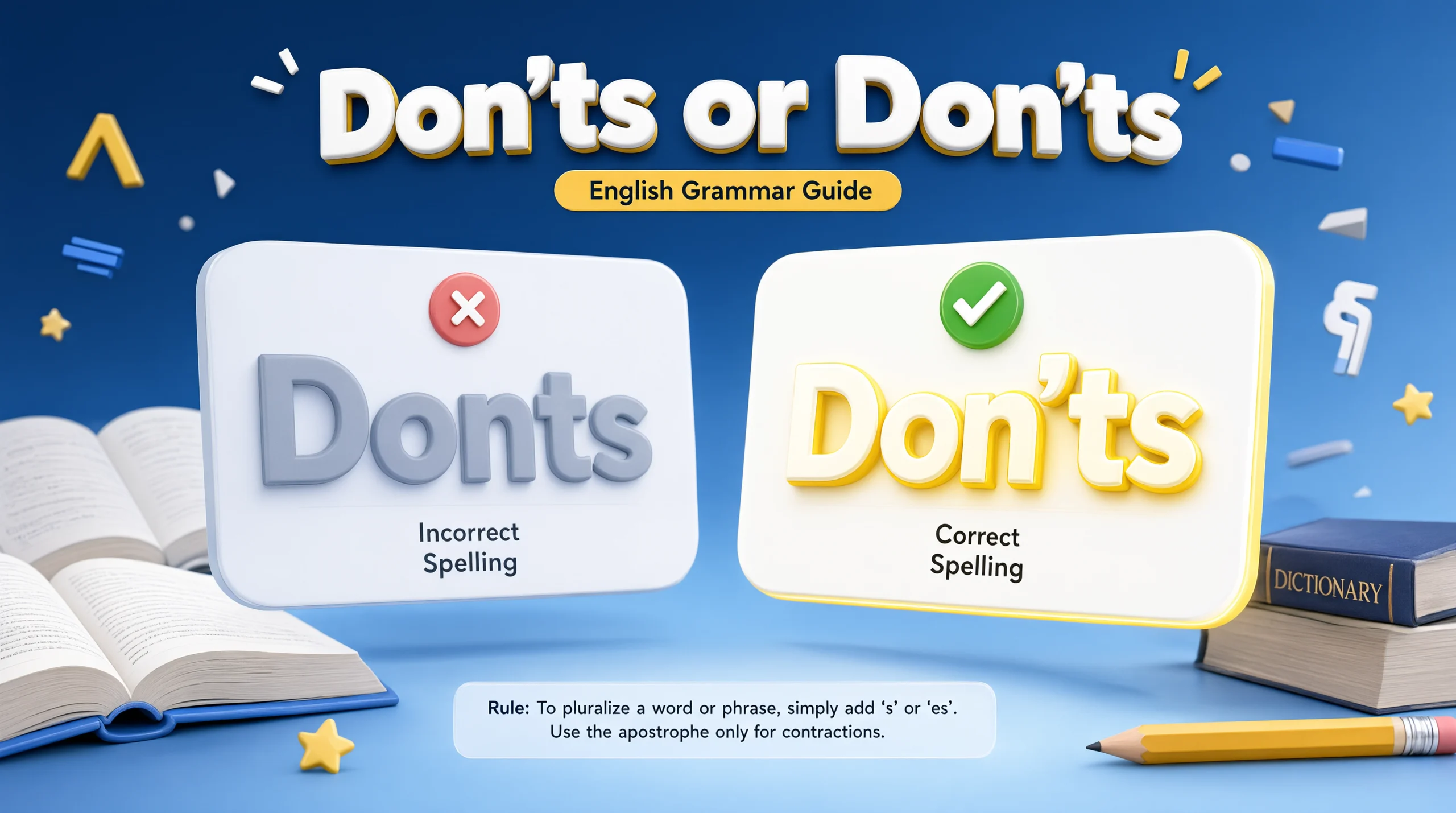
If you have ever wondered if to write “donts” or “don’ts,” you are not alone. Apostrophes can make English spelling confusing, especially when a word has an unusual plural form. The good news is that the correct spelling is “don’ts,” with an apostrophe. The spelling “donts” is generally considered incorrect in standard English.
The word “don’ts” is the plural form of “don’t,” which means something a person should not do. It is commonly used alongside “dos” when discussing rules, instructions, advice, and things to avoid. For example, a guide might include a list of dos and don’ts for workplace behavior.
Understanding this spelling difference will help you write more accurately in emails, school assignments, articles, and everyday conversations. In this guide, you will learn the meaning of both forms, the apostrophe rule, practical examples, and how to remember the correct spelling.
Quick Answer: Donts or Don’ts?
Don’ts is the correct spelling in standard English. It is the plural form of “don’t” and refers to things people should avoid doing. The apostrophe is retained because the word is formed from the contraction “do not.” “Donts” without an apostrophe is generally incorrect.
Why Do People Confuse Donts and Don’ts?
People often confuse these spellings because English usually forms plurals by adding -s without an apostrophe.
For example:
- Book → Books
- Car → Cars
- Apple → Apples
However, “don’t” is a contraction of “do not.” When making it plural, the apostrophe stays in place.
This creates the spelling “don’ts,” which looks unusual compared with ordinary plural nouns.
Another reason for confusion is that people sometimes think apostrophes are only used for possession or contractions. In this case, the apostrophe is part of the original contraction and remains when the word becomes plural.
First Word: Donts
Donts is generally an incorrect spelling of the plural form of “don’t.”
It is sometimes used informally because writers may assume that adding an apostrophe is unnecessary. However, standard dictionaries and conventional English writing use “don’ts.”
Meaning of Donts
“Donts” is usually intended to mean things that people should not do. However, without the apostrophe, it is not the standard spelling.
Examples of Incorrect Usage
- Incorrect: Read the donts before starting the project.
- Incorrect: These are the donts of professional communication.
- Incorrect: Write down all the dos and donts.
In each sentence, the correct spelling is “don’ts.”
Second Word: Don’ts
Don’ts is the correct standard English spelling. It is the plural form of “don’t,” a contraction of “do not.”
It describes actions, behaviors, or activities that people should avoid.
Meaning of Don’ts
Don’ts are rules, instructions, or recommendations explaining what someone should not do.
The word is frequently paired with “dos” to create the expression “dos and don’ts.”
Examples of Don’ts in Sentences
- Learn the don’ts before entering the laboratory.
- The teacher explained the dos and don’ts of classroom behavior.
- These don’ts will help you avoid common mistakes.
- Every new employee should understand the workplace don’ts.
Donts vs Don’ts: Comparison Table
| Feature | Donts | Don’ts |
| Spelling | Incorrect in standard usage | Correct |
| Apostrophe | Missing | Included |
| Meaning intended | Things to avoid | Things to avoid |
| Grammatical usage | Nonstandard | Standard plural noun |
| Formal writing | Avoid | Recommended |
| Example | Read the donts. | Read the don’ts. |
Remember: Always write “don’ts” when referring to things people should avoid doing.
When to Use Each: Donts or Don’ts
Knowing when to use the correct spelling makes your writing clearer and more professional.
When to Use Don’ts
Use “don’ts” when talking about prohibited actions, unwanted behaviors, or things people should avoid.
Examples:
- The safety guide explains the dos and don’ts of using machinery.
- Here are five important don’ts for new drivers.
- Follow the don’ts listed in the instructions.
When to Use Donts
Avoid “donts” in standard English writing. Although readers may understand what you mean, it is not the accepted spelling.
For professional documents, academic assignments, blog posts, and everyday communication, use “don’ts.”
12 Examples of Don’ts in Sentences
Here are practical examples showing how to use “don’ts” correctly.
- Every student should understand the dos and don’ts of classroom behavior.
- The guide explains the important don’ts of online communication.
- Make a list of the dos and don’ts before starting your business.
- The safety instructor discussed the don’ts of handling chemicals.
- Parents should teach children the basic dos and don’ts of road safety.
- The manager shared several workplace don’ts with the new employees.
- Knowing the don’ts can help you avoid unnecessary problems.
- The travel guide includes useful dos and don’ts for tourists.
- We discussed the dos and don’ts of social media use.
- These don’ts are important for maintaining good health and hygiene.
- The teacher wrote the dos and don’ts on the classroom board.
- Please read the don’ts carefully before using this equipment.
Common Mistakes When Writing Don’ts
Even experienced writers sometimes make apostrophe mistakes. Here are some common errors to avoid.
1. Writing donts instead of don’ts
Incorrect: Follow these donts.
Correct: Follow these don’ts.
2. Confusing don’t with don’ts
“Don’t” is singular as a contraction, while “don’ts” is the plural noun referring to things people should avoid.
- Don’t touch the equipment.
- Read the don’ts before using the equipment.
3. Using an apostrophe incorrectly
Incorrect: Don’s and dos
Correct: Don’ts and dos
4. Forgetting the apostrophe in headings
Even in titles, the correct spelling remains “don’ts.”
5. Assuming every plural needs an apostrophe
Most ordinary plurals do not need apostrophes. However, “don’ts” retains the apostrophe from its original contraction.
Memory Trick: How to Remember Don’ts
Here is a simple way to remember the correct spelling:
Think of the original contraction:
Don’t = Do Not
When you make it plural as a noun, keep the apostrophe:
Don’t → Don’ts
Remember this simple rule:
- Dos = Things you should do.
- Don’ts = Things you should not do.
The apostrophe in “don’ts” is your reminder that the word comes from the contraction “don’t.”
American vs British English: Is There a Difference?
There is no significant spelling difference between American and British English when using “don’ts.”
Both varieties generally use the spelling don’ts in standard writing.
| English Variety | Correct Spelling | Example |
| American English | Don’ts | Read the dos and don’ts. |
| British English | Don’ts | Learn the dos and don’ts. |
| Australian English | Don’ts | Follow the workplace dos and don’ts. |
| Canadian English | Don’ts | Understand the dos and don’ts. |
Although punctuation styles may vary slightly between publications, “don’ts” remains the conventional spelling.
Similar Words You Should Know
Learning related words can help you understand apostrophes and contractions more clearly.
| Word | Meaning | Example |
| Don’t | Do not | Don’t make that mistake. |
| Doesn’t | Does not | She doesn’t like coffee. |
| Didn’t | Did not | He didn’t attend class. |
| Can’t | Cannot | I can’t find my keys. |
| Won’t | Will not | They won’t arrive today. |
| Isn’t | Is not | This isn’t my book. |
| Dos | Things to do | Follow the dos carefully. |
| Don’ts | Things to avoid | Remember the don’ts. |
These words show how apostrophes are used in English contractions.
Final Verdict: Donts or Don’ts?
The correct spelling is don’ts, with an apostrophe.
“Donts” without an apostrophe is generally considered a spelling mistake in standard English. Use “don’ts” when referring to actions, behaviors, or things that people should avoid.
For example:
- Incorrect: The guide explains the dos and donts.
- Correct: The guide explains the dos and don’ts.
If you want to write clearly and professionally, always choose “don’ts.”
FAQs:
1. Is it donts or don’ts?
“Don’ts” is the correct spelling in standard English. It is the plural form of “don’t” and refers to things people should avoid doing.
2. Why does don’ts have an apostrophe?
“Don’ts” keeps the apostrophe from the original contraction “don’t,” which means “do not.” The apostrophe remains when the contraction is used as a plural noun.
3. Is donts ever correct?
“Donts” is generally considered nonstandard and should be avoided in formal and standard English writing. Use “don’ts” instead.
4. Is it dos and don’ts or do’s and don’ts?
“Dos and don’ts” is the preferred conventional spelling. “Do’s” is also seen in some writing styles, but “dos” is commonly recommended.
5. What is the singular form of don’ts?
The singular form is “don’t” when referring to the contraction meaning “do not.” For example, “One important don’t is to avoid sharing your password.”
6. What does dos and don’ts mean?
“Dos and don’ts” refers to things people should do and things they should avoid doing. It is commonly used in guides, instructions, rules, and advice.
7. Is don’ts the same in American and British English?
Yes. Both American and British English generally use “don’ts” as the standard spelling. There is no major regional spelling difference.
Remember This
- Don’ts is the correct spelling.
- Donts is nonstandard in ordinary English writing.
- The apostrophe comes from the contraction “don’t.”
- “Don’ts” means things people should avoid doing.
- The preferred expression is “dos and don’ts.”
Whenever you are unsure, remember that the apostrophe stays in “don’ts.”
Conclusion
Choosing between “donts” and “don’ts” is simple once you understand the apostrophe rule. “Don’ts” is the correct spelling in standard English because it comes from the contraction “don’t,” meaning “do not.” It is used as a plural noun to describe actions, behaviors, or activities that people should avoid.
If you are writing an article, completing a school assignment, preparing instructions, or creating a list of rules, always use “don’ts” instead of “donts.” Remember the expression “dos and don’ts,” and you will be able to use this word confidently in everyday and professional writing.