Have you ever wondered if the correct spelling is agast or aghast? These two words look almost identical, but only one is the standard spelling in modern English. If you are writing an essay, sending a message, or improving your English vocabulary, knowing the difference can help you avoid spelling mistakes.
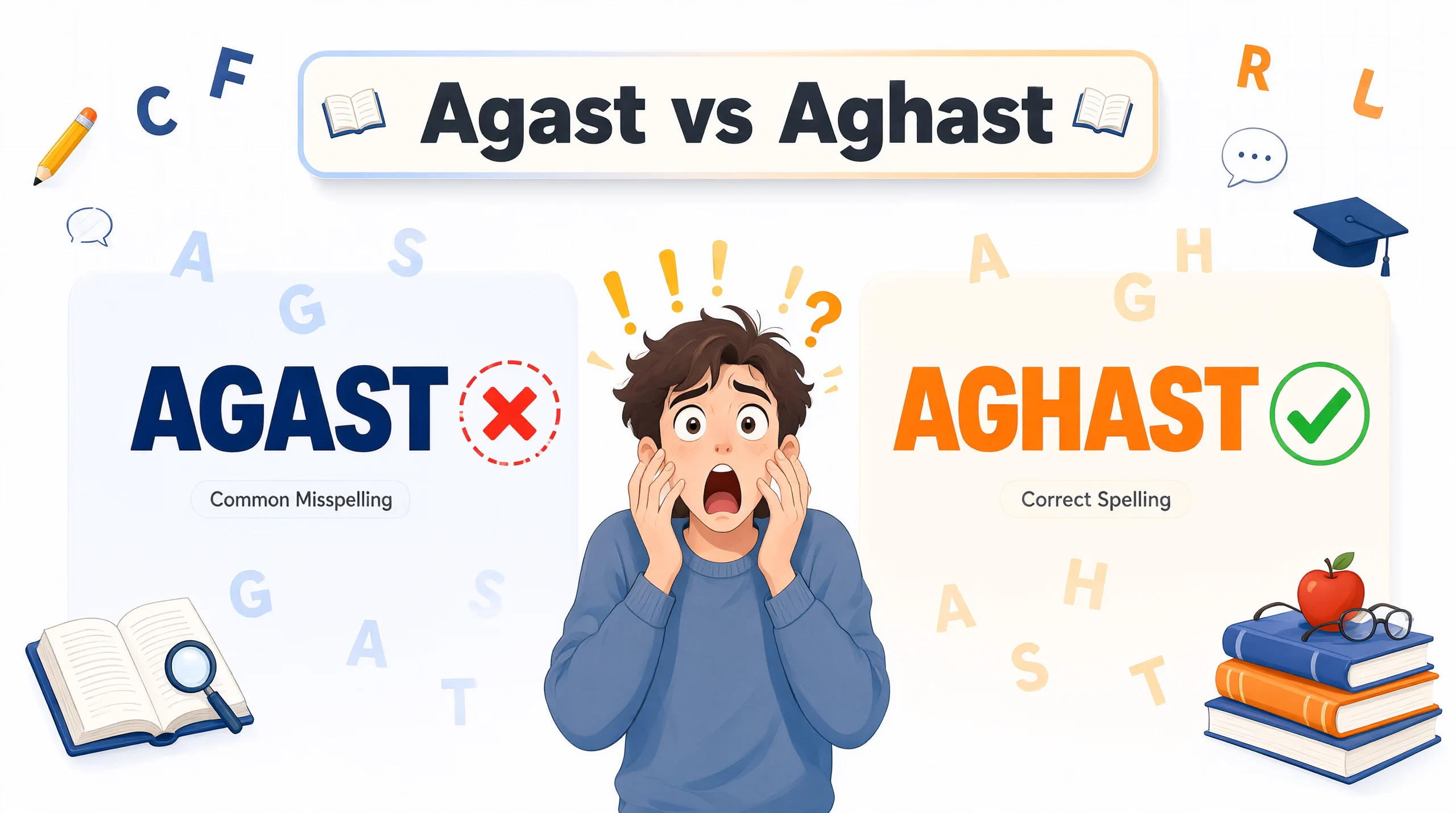
The correct word is aghast, which means feeling shocked, horrified, or extremely surprised by something unexpected or unpleasant. The spelling agast is incorrect in standard modern English. Although it may appear in searches, informal writing, or as a typing mistake, it should not be used as a replacement for aghast.
Understanding this spelling difference is especially useful for students, ESL learners, and anyone who wants to communicate clearly. In this guide, you will learn what each spelling means, how to use aghast correctly, and how to remember its spelling through simple explanations and practical examples.
Quick Answer
Aghast is the correct spelling, while agast is a misspelling in standard modern English. Aghast is an adjective that describes someone who feels shocked, horrified, or deeply surprised. For example: “She was aghast when she heard the terrible news.”
Why Do People Confuse Agast and Aghast?
People often confuse these spellings because they look and sound very similar.
There are three main reasons for this confusion:
- Similar pronunciation: Both spellings may be pronounced similarly, with the same short vowel sound.
- Unusual spelling: The combination of letters in “aghast” can be difficult for English learners to remember.
- Typing mistakes: People sometimes leave out the letter “h” when writing quickly.
However, only aghast is the accepted spelling in standard modern English.
1. Agast: Meaning and Correct Usage
Agast is an incorrect spelling of aghast in standard modern English.
It does not function as the standard adjective meaning shocked or horrified. If you want to describe someone’s reaction to something frightening, surprising, or unpleasant, use aghast instead.
Incorrect example:
– She was agast at the shocking announcement.
Correct example:
– She was aghast at the shocking announcement.
Remember that leaving out the letter “h” makes the spelling incorrect.
2. Aghast: Meaning, Definition, and Examples
Aghast is an adjective that means extremely shocked, frightened, horrified, or surprised by something unexpected.
It describes a strong emotional reaction, usually when someone experiences or discovers something disturbing, frightening, or unbelievable.
Simple definition: Feeling shocked or horrified because of something unexpected.
Examples:
- I was aghast when I saw the damage.
- She looked aghast after hearing the news.
- Everyone was aghast at his rude behavior.
- He stood aghast at the terrible accident.
Synonyms of Aghast:
- Shocked
- Horrified
- Stunned
- Astonished
- Appalled
- Speechless
- Startled
- Dismayed
How to use Aghast in a sentence
Aghast commonly appears after linking verbs such as was, were, looked, and seemed.
Examples:
- They were aghast at the decision.
- He seemed aghast by the sudden change.
- I was absolutely aghast at the results.
Agast vs Aghast: Comparison Table
| Feature | Agast | Aghast |
| Spelling | Incorrect | Correct |
| Standard usage | Not accepted for this meaning | Accepted |
| Meaning | No standard meaning intended here | Shocked or horrified |
| Part of speech | Incorrect form | Adjective |
| Pronunciation | Often intended to sound like aghast | uh-GAST |
| Example | Agast at the news | Aghast at the news |
| Usage | Avoid | Use |
When Should You Use Agast or Aghast?
Choosing between these two spellings is simple because only one is correct in standard English.
Use Agast
Avoid using agast when you mean shocked or horrified. It is a spelling mistake in this context.
Incorrect:
– My mother was agast at the price.
Use Aghast
Use aghast when describing a strong feeling of shock, horror, or disbelief.
Correct:
– My mother was aghast at the price.
Another example:
– The teacher was aghast when she discovered the students had damaged the classroom.
12 Examples of Aghast in Sentences
Here are 12 simple examples to help you understand how to use aghast naturally.
- She was aghast when she heard the unexpected news.
- I was aghast at the amount of money they spent.
- The teacher looked aghast at the students’ behavior.
- Everyone was aghast after seeing the accident.
- He stood aghast when he discovered the truth.
- My parents were aghast at my exam results.
- The audience looked aghast during the shocking performance.
- She was absolutely aghast at his dishonest actions.
- We were aghast when the old building suddenly collapsed.
- The manager seemed aghast after reading the complaint.
- I stared aghast at the damage caused by the storm.
- They were aghast to discover that their belongings were missing.
These examples show that aghast is commonly used to describe strong emotional reactions to unexpected or disturbing situations.
Common Mistakes to Avoid
English learners sometimes make spelling and usage mistakes when writing aghast.
Here are some common errors:
1. Writing Agast Instead of Aghast
Incorrect: He was agast at the result.
Correct: He was aghast at the result.
2. Leaving Out the Letter H
The letter “h” is an essential part of the correct spelling. Always write aghast.
3. Using Aghast for Ordinary Surprise
Aghast generally describes a strong feeling of shock or horror. It is stronger than simply being surprised.
4. Treating Aghast as a Verb
Aghast is an adjective, not a verb.
Incorrect: She aghasted at the news.
Correct: She was aghast at the news.
Memory Trick: How to Remember Aghast
A simple way to remember the correct spelling is to associate Aghast with the letter H.
Think of:
- A = A
- H = Horrified
- GAST = The remaining letters
Remember the phrase:
“Aghast has an H for Horrified.”
Whenever you want to describe someone who feels extremely shocked or horrified, remember to include the letter H.
American vs British English: Is There Any Difference?
There is no spelling difference between American and British English for this word.
Both varieties use aghast as the correct spelling.
| English Variety | Correct Spelling | Example |
| American English | Aghast | She was aghast at the news. |
| British English | Aghast | He looked aghast at the discovery. |
| Australian English | Aghast | They were aghast at the announcement. |
| Canadian English | Aghast | I was aghast at the result. |
The spelling remains the same regardless of which variety of English you use.
Similar Words to Aghast
If you want to expand your vocabulary, learning words with similar meanings can help you express different levels of shock and surprise.
| Word | Simple Meaning | Example |
| Shocked | Very surprised | She was shocked by the news. |
| Horrified | Extremely frightened or disturbed | He was horrified by the accident. |
| Stunned | Unable to react because of surprise | I was stunned by the announcement. |
| Appalled | Deeply upset or disgusted | They were appalled by his behavior. |
| Astonished | Extremely surprised | We were astonished by the result. |
| Dismayed | Upset or disappointed | She was dismayed by the decision. |
| Startled | Suddenly surprised or frightened | He was startled by the noise. |
| Speechless | Unable to speak because of emotion | I was speechless after hearing the news. |
Although these words are related, they are not always interchangeable. Aghast usually communicates a strong reaction involving shock, horror, or disbelief.
FAQs:
1. Is Agast or Aghast the Correct Spelling?
Aghast is the correct spelling in standard modern English. Agast is a misspelling when used to mean shocked or horrified.
2. What Does Aghast Mean in Simple English?
Aghast means feeling extremely shocked, frightened, or horrified because of something unexpected or unpleasant.
3. Is Agast a Real English Word?
Agast is not the standard spelling of the adjective meaning shocked or horrified. The correct spelling for that meaning is aghast.
4. How Do You Pronounce Aghast?
Aghast is pronounced uh-GAST. The first syllable is unstressed, while the second syllable receives the main emphasis.
5. Can Aghast Be Used as an Adjective?
Yes. Aghast is an adjective that describes a person’s emotional reaction to something shocking, frightening, or disturbing.
Example: The audience was aghast at the unexpected announcement.
6. What Is Another Word for Aghast?
Some common synonyms include shocked, horrified, stunned, appalled, astonished, and dismayed. The best alternative depends on the situation.
7. Is Aghast Used in American and British English?
Yes. Aghast is used in both American and British English, and its spelling remains the same in both varieties.
Remember This
- Aghast = Correct spelling.
- Agast = Incorrect spelling for the intended meaning.
- Aghast = Extremely shocked, horrified, or surprised.
- Part of speech = Adjective.
- Memory trick = Aghast has an H for Horrified.
Always include the letter H when writing this word.
Conclusion
The difference between agast and aghast is simple: aghast is the correct spelling, while agast is a common spelling mistake. Aghast is an adjective used to describe someone who feels extremely shocked, horrified, or surprised by something unexpected or unpleasant. Learning its meaning and correct spelling can improve your vocabulary and help you write more accurately.
Whenever you are unsure which spelling to choose, remember the simple trick: Aghast has an H for Horrified. Practice using it in everyday sentences, and you will find it easier to remember. If you are writing an essay, preparing for an exam, or improving your English skills, using aghast correctly will make your communication clearer and more effective.