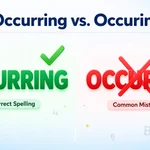
Understanding thier vs their vs there can be confusing because these words look similar when written quickly. However, there is one important difference: “thier” is a misspelling, while “their” and “there” are both correct English words with different meanings. Knowing when to use each word will help you write more clearly and avoid common spelling mistakes.
Many students, English learners, and even experienced writers accidentally type “thier” instead of “their.” Others confuse “their” with “there” because the words sound alike in everyday speech. The good news is that you can learn the difference with a few simple rules and practical examples. Once you understand what each word means and how it works in a sentence, choosing the correct spelling becomes much easier.
Quick Answer: Thier vs Their vs There
Thier is an incorrect spelling of their. Their is a possessive word that shows ownership, as in “Their house is beautiful.” There refers to a place, introduces something, or indicates that something exists, as in “The keys are over there” or “There is a problem.” Remember: use their for ownership and there for a place or existence.
Why Do People Confuse Thier, Their, and There?
People often confuse these words for two main reasons: similar spelling and similar pronunciation.
- Thier: A common spelling mistake caused by switching the letters i and e.
- Their: Shows that something belongs to people or things.
- There: Refers to a location or helps introduce the existence of something.
The words their and there are homophones in most varieties of English. This means they sound the same but have different meanings and spellings.
For example:
- Their dog is friendly.
- Their dog is over there.
The first their shows ownership. The second there identifies a location.
What Does “Thier” Mean?
“Thier” is not a standard English word. It is a common spelling error, usually made when someone intends to write their.
The mistake happens because English spelling does not always follow predictable patterns. When typing quickly, writers may accidentally place the letters i and e in the wrong order.
Incorrect: Thier parents are coming today.
Correct: Their parents are coming today.
More examples of the correct spelling:
- Their teacher is helpful.
- Their room is clean.
- Their friends arrived early.
- Their answers were correct.
Remember: In standard English writing, replace thier with their when you mean that something belongs to someone.
What Does “Their” Mean?
Their is a possessive determiner used to show that something belongs to or is associated with a person or group of people. It usually appears before a noun.
Examples:
- Their car is parked outside.
- The children finished their homework.
- The students brought their books.
- Everyone should bring their own water bottle.
In the last example, their is used as a singular, gender-neutral possessive. This usage is widely accepted in modern English.
How to Use “Their” in a Sentence
Use their when talking about ownership, relationships, responsibilities, or things associated with people.
- Ownership: Their house is large.
- Relationships: Their mother is a doctor.
- Responsibilities: They completed their assignments.
- Personal belongings: The players collected their bags.
A simple way to check your sentence is to ask: “Does this word show whose thing it is?” If the answer is yes, their is probably the right choice.
What Does “There” Mean?
There has several uses in English. It can refer to a place, introduce the existence of something, or appear in expressions that describe a situation.
1. “There” Refers to a Place
Use there when talking about a location, especially one away from the speaker.
Examples:
- Put your shoes there.
- My brother is standing over there.
- We visited the park, and our friends were there.
- The restaurant is just over there.
2. “There” Shows That Something Exists
Use there in expressions such as there is, there are, there was, and there were.
Examples:
- There is a book on the desk.
- There are five students in the classroom.
- There was a problem with the computer.
- There were many people at the event.
3. “There” Appears in Common Expressions
Examples:
- There you go!
- There is no need to worry.
- I have been there before.
- There seems to be a mistake.
In these sentences, there does not show ownership. Its meaning depends on how it is used in the sentence.
Thier vs Their vs There: Comparison Table
| Word | Correct English? | Meaning | Example |
| Thier | No | Misspelling of their | Thier dog is cute. (Incorrect) |
| Their | Yes | Shows ownership or association | Their dog is cute. |
| There | Yes | Refers to a place or existence | The dog is over there. |
When Should You Use Each Word?
Choosing the correct word becomes easier when you focus on the meaning of the sentence.
Use “Their” for Ownership
Use their when something belongs to people or is associated with them.
- Their children are playing outside.
- The workers finished their tasks.
- The team celebrated their victory.
Use “There” for Places or Existence
Use there when identifying a location or saying that something exists.
- Your bag is over there.
- There is a message for you.
- There are two chairs in the room.
Avoid “Thier” in Standard Writing
Do not use thier in school assignments, professional emails, essays, or other standard English writing.
- Incorrect: Thier house is near the school.
- Correct: Their house is near the school.
15 Examples of Their vs There in Sentences
These examples show how the correct word changes according to meaning.
| No. | Sentence | Why It Is Correct |
| 1 | Their parents are kind. | Their shows ownership or association. |
| 2 | The children left their toys outside. | The toys belong to the children. |
| 3 | Their school opens at eight. | The school is associated with them. |
| 4 | The students completed their work. | Their indicates whose work it is. |
| 5 | Their house has a beautiful garden. | The house belongs to them. |
| 6 | Your keys are over there. | There identifies a place. |
| 7 | There is a cat under the table. | There introduces something that exists. |
| 8 | There are three apples in the basket. | There are introduces plural items. |
| 9 | We went there last summer. | There refers to a location. |
| 10 | There was a loud noise outside. | There was introduces an event or occurrence. |
| 11 | Their friends arrived early. | Their shows association. |
| 12 | Please leave the package there. | There indicates where to leave it. |
| 13 | Everyone brought their lunch. | Their is a singular, gender-neutral possessive. |
| 14 | There seems to be a misunderstanding. | There introduces a situation. |
| 15 | Their dog is sleeping over there. | The first word shows ownership; the second indicates location. |
Common Mistakes When Using Thier, Their, and There
Even simple words can cause spelling and grammar errors. Here are some mistakes to watch for.
Mistake 1: Writing “Thier” Instead of “Their”
Incorrect: Thier teacher gave them homework.
Correct: Their teacher gave them homework.
Why? The correct spelling is their, with e before i.
Mistake 2: Using “There” to Show Ownership
Incorrect: There books are on the table.
Correct: Their books are on the table.
Why? The sentence identifies whose books they are, so you need their.
Mistake 3: Using “Their” to Identify a Location
Incorrect: Put the box over their.
Correct: Put the box over there.
Why? The sentence refers to a place, so you need there.
Mistake 4: Confusing “Their” With “They’re”
Incorrect: Their going to the library.
Correct: They’re going to the library.
Why? They’re is a contraction of they are. Their shows ownership.
What Is an Easy Memory Trick for Their vs There?
Use these simple memory tricks to remember the difference.
- Their = ownership. Think of their belongings or their house.
- There = a place. The word here appears inside there, which can remind you of location.
- Thier = typo. Remember the correct spelling: their.
You can also use this quick test:
- If you can replace the word with our or his, use their.
- If you can replace the word with here or in that place, use there.
- If you wrote thier, correct the spelling to their when you mean ownership.
These tricks are helpful, but always check the full meaning of your sentence.
Is There a Difference in American and British English?
No significant difference exists between American and British English for these three spellings.
| Word | American English | British English |
| Thier | Incorrect spelling | Incorrect spelling |
| Their | Correct | Correct |
| There | Correct | Correct |
Both varieties use their to show possession and there for a place or existential construction. The spelling thier is considered incorrect in standard writing in both varieties.
Similar Words You Should Know
Learning these related words can help you avoid additional grammar and spelling mistakes.
| Word | Meaning | Example |
| They’re | Contraction of they are | They’re ready to leave. |
| Here | In or at this place | Come here, please. |
| Where | Asks about a place | Where is my bag? |
| Your | Shows possession by you | Your phone is ringing. |
| You’re | Contraction of you are | You’re very helpful. |
| Its | Possessive form of it | The cat licked its paw. |
| It’s | Contraction of it is or it has | It’s a beautiful day. |
The most important distinction is between their, there, and they’re. They often sound alike, but their meanings and grammatical roles are different.
Final Verdict: Thier vs Their vs There
The difference is simple once you learn the rules:
- Thier: An incorrect spelling that should usually be corrected to their.
- Their: A possessive word that shows ownership or association.
- There: A word used for places, existence, and certain expressions.
For example, in the sentence “Their bags are over there,” their tells us whose bags they are, while there tells us where the bags are.
FAQs:
1. Is “Thier” a real word?
No. Thier is not a standard English word. It is a common misspelling of their. Use their when showing ownership, as in “Their house is beautiful.”
2. What is the difference between “their” and “there”?
Their shows ownership or association, while there refers to a place or introduces something that exists. For example, “Their car is there” uses both words correctly.
3. Is it “thier” or “their”?
The correct spelling is their. The spelling thier is a common typing or spelling mistake. Write “Their teacher is helpful,” not “Thier teacher is helpful.”
4. How do I remember the spelling of “their”?
Remember the phrase “their belongings.” Both words refer to things associated with people. You can also memorize the spelling pattern: their has e before i.
5. Can “their” refer to one person?
Yes. Their can be used as a singular, gender-neutral possessive when referring to one person whose gender is unknown, irrelevant, or expressed using singular they. For example, “Every student should bring their notebook.”
6. Is “there” always about a place?
No. There can refer to a location, but it can also introduce the existence of something. For example, “There is a problem” does not identify a physical place.
7. What is the difference between “their,” “there,” and “they’re”?
Their shows ownership, there refers to a place or existence, and they’re means they are. For example: “Their friends are there, and they’re ready.”
Remember This
- Their = ownership.
- There = place or existence.
- They’re = they are.
- Thier = incorrect spelling.
Before submitting an assignment or sending a message, read the sentence and check what you mean. If the word shows ownership, choose their. If it refers to a location or introduces existence, choose there.
Conclusion
Understanding the difference between thier, their, and there can make your English writing clearer and more accurate. The main rule is easy: thier is a misspelling, their shows ownership, and there refers to a place or helps express that something exists. Learning these distinctions will help you avoid common mistakes in everyday writing, schoolwork, and professional communication.
With regular practice, you can recognize the correct word without having to stop and think about it. Read each sentence carefully, focus on its meaning, and use the memory tricks and examples in this guide whenever you need a reminder. A little attention to spelling can make a big difference in how clearly you communicate.