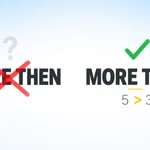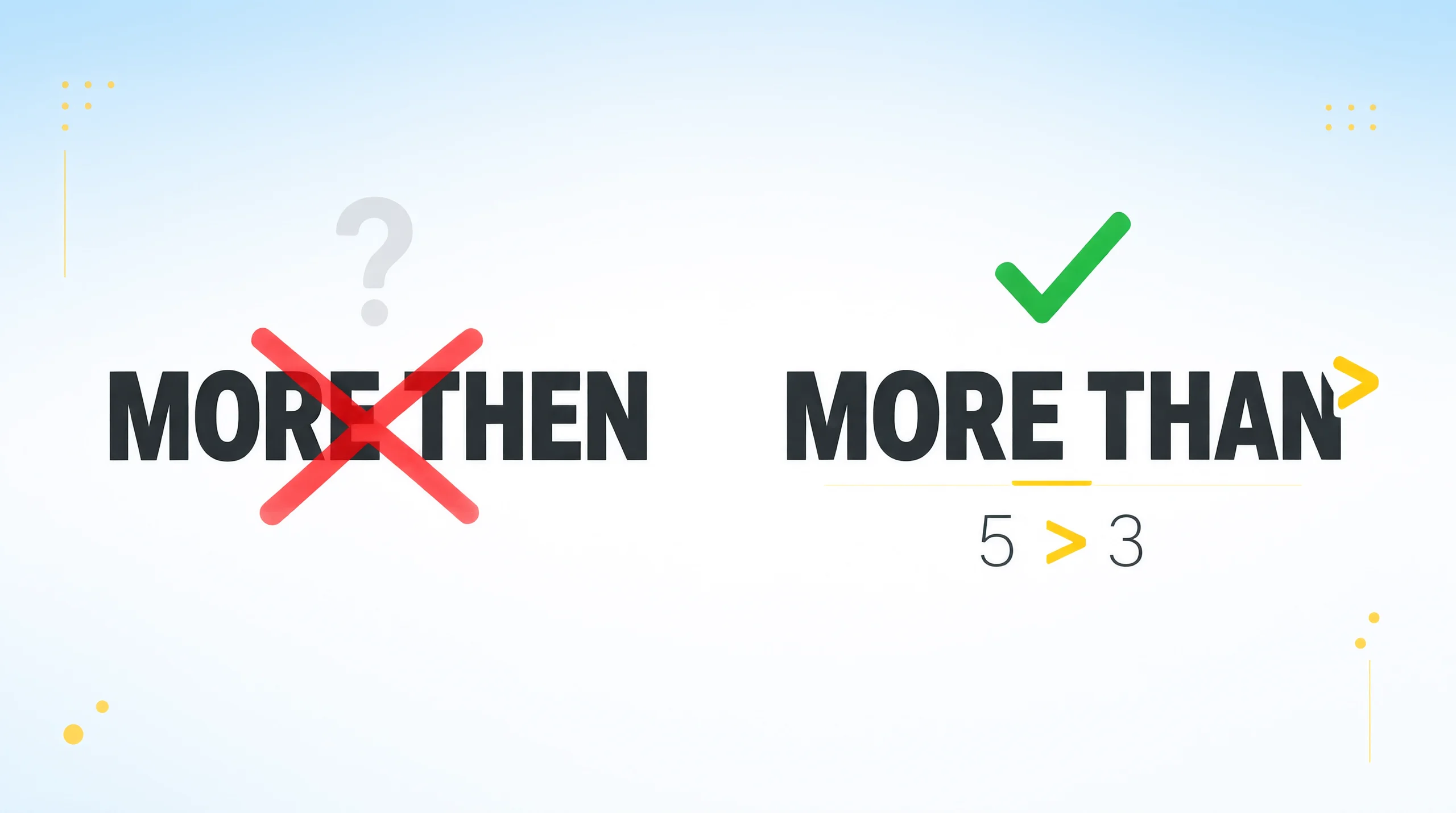
The difference between “more than” and “more then” is simple: more than is the correct phrase when comparing amounts, numbers, quantities, or degrees. More then is usually a mistake because then refers to time, sequence, or what happens next, not comparison.
If you have ever wondered whether to write “more then 10 people” or “more than 10 people,” the correct choice is “more than 10 people.” This small spelling difference can change the meaning of a sentence or make your writing look incorrect.
Both than and then are common English words, and they sound similar in some accents. That is why students, English learners, and even experienced writers sometimes confuse them. The easiest way to avoid this mistake is to remember that than is used for comparisons, while then is used for time and order.
Quick Answer
More than is correct when you mean a greater amount, number, or degree. For example, “She has more than 20 books.” More then is generally incorrect when making a comparison. Use then when talking about what happens next or when something happened, as in “We ate dinner, then watched a movie.”
Why Do People Confuse “More Than” and “More Then”?
People confuse these phrases because than and then look almost identical and can sound similar when spoken quickly. However, they serve different grammatical purposes.
- Than: Used to compare two things.
- Then: Used to describe time, sequence, or a result.
For example:
- Correct: I have more money than you.
- Incorrect: I have more money then you.
- Correct: I finished my homework, then I went outside.
The key is to focus on the meaning of the sentence rather than how the words sound.
What Does “Than” Mean?
Than is a conjunction or preposition used to compare people, objects, quantities, or situations. It commonly appears after comparative words such as more, less, better, bigger, and faster.
When Is “Than” Used?
Use than when showing that one thing has a greater, smaller, or different quality or amount compared with another.
Examples:
- My brother is taller than me.
- This book is more interesting than that one.
- She earns more than her coworkers.
- Today is colder than yesterday.
- We have more than enough food.
In each sentence, than introduces the person or thing being compared.
What Does “Then” Mean?
Then is an adverb that usually refers to a time, a sequence of events, or a result. It helps readers understand when something happens or what follows another action.
When Is “Then” Used?
Use then when describing what happened next, referring to a particular time, or explaining a consequence.
Examples:
- We ate lunch, then went shopping.
- I lived in London back then.
- Finish your work, and then you can relax.
- If you are ready, then let’s begin.
- First, wash the vegetables. Then cut them.
In these sentences, then describes time, order, or a result rather than a comparison.
More Than vs. More Then: Comparison Table
| Feature | More Than | More Then |
| Correct usage | Standard phrase for comparisons | Usually an incorrect comparison |
| Main word meaning | Than = comparison | Then = time or sequence |
| Used with numbers | Yes | No, not for comparisons |
| Used with comparative adjectives | Yes | No |
| Example | More than 50 students attended. | Incorrect: More then 50 students attended. |
| Correct alternative | More than 50 students attended. | More than 50 students attended. |
Remember that more then can appear in a sentence when more and then have separate grammatical roles, but it is uncommon. For example, “There was more to do then than there is now” uses then to refer to an earlier time and than to make a comparison.
When Should You Use “More Than” or “Then”?
Choose the word that matches the meaning you want to express.
Use “More Than” for Comparisons
Use more than when referring to a greater quantity, amount, number, or degree.
Examples:
- The bag weighs more than five kilograms.
- He has more than 100 followers.
- This task takes more than an hour.
- She is more confident than before.
Use “Then” for Time and Sequence
Use then when explaining when something happened or what happened next.
Examples:
- We visited the museum, then went to dinner.
- I was younger back then.
- Read the instructions, then start the test.
- If it rains, then we will stay home.
Quick test: If you are comparing two things, choose than. If you are talking about time or what happens next, choose then.
12 Examples of “More Than” vs. “Then”
These examples show the correct usage of both words in everyday English.
| Incorrect or Correct | Example Sentence |
| Correct: More than | I have more than ten pencils. |
| Incorrect: More then | She is more then five years old. |
| Correct: More than | This phone costs more than mine. |
| Correct: Then | We finished dinner, then watched TV. |
| Correct: More than | More than 200 people joined the event. |
| Correct: Then | I will call you then. |
| Correct: More than | He is stronger than his brother. |
| Correct: Then | First, mix the flour. Then add water. |
| Correct: More than | The journey takes more than two hours. |
| Correct: Then | I was living there back then. |
| Correct: More than | She likes reading more than watching TV. |
| Correct: Then | If you agree, then we can continue. |
Notice that the incorrect examples use then where a comparison requires than. In contrast, the correct then examples refer to time, order, or a result.
Common Mistakes With “More Than” and “More Then”
Even though the difference is straightforward, these mistakes occur frequently in writing.
Mistake 1: Using “Then” Before a Number
Incorrect: There were more then 30 guests.
Correct: There were more than 30 guests.
Why? The sentence compares the number of guests with the number 30, so than is required.
Mistake 2: Using “Then” After a Comparative Word
Incorrect: My new laptop is better then my old one.
Correct: My new laptop is better than my old one.
Why? The word better introduces a comparison.
Mistake 3: Using “Than” to Describe the Next Action
Incorrect: We had breakfast, than went to work.
Correct: We had breakfast, then went to work.
Why? The sentence describes the order of two actions.
Mistake 4: Confusing “More Than” With “More Then Ever”
Incorrect: I am happier more then ever.
Correct: I am happier than ever.
Correct: I feel more confident now than I did then.
Why? Than expresses comparison, while then can refer to an earlier time.
What Is an Easy Memory Trick for “Than” vs. “Then”?
Use this simple memory trick:
- Than = Comparison: Both than and comparison contain the letter a? Not quite, so remember the phrase “greater than.”
- Then = Time: Both then and time begin with t.
For a more reliable test, replace the word with its meaning:
- If you mean “compared with,” use than.
- If you mean “next” or “at that time,” use then.
For example, “My car is faster ___ yours.” The intended meaning is “compared with yours,” so the answer is than.
Is There a Difference Between American and British English?
No meaningful difference exists between American and British English for this rule. Both varieties use than for comparisons and then for time or sequence.
| Meaning | American English | British English |
| Comparison | More than 10 miles | More than 10 miles |
| Sequence | Eat, then leave | Eat, then leave |
| Comparative adjective | Better than before | Better than before |
| Reference to the past | Back then | Back then |
The spelling and grammatical distinction are the same in both varieties. Neither American nor British English considers more then a standard substitute for more than in comparisons.
Similar Words That Are Easy to Confuse
English has several word pairs that look or sound alike but have different meanings. Learning these distinctions can help you write more accurately.
- Your vs. You’re: Your shows possession; you’re means “you are.”
- Their vs. There: Their shows possession; there refers to a place or introduces certain expressions.
- Its vs. It’s: Its shows possession; it’s means “it is” or “it has.”
- Affect vs. Effect: Affect is usually a verb meaning to influence; effect is usually a noun meaning a result.
- To vs. Too: To commonly marks direction or an infinitive; too means “also” or “excessively.”
- Than vs. Then: Than compares; then refers to time, sequence, or a result.
Understanding these pairs makes everyday writing, school assignments, emails, and professional communication clearer.
Final Verdict: More Than or More Then?
“More than” is the correct phrase when making a comparison. Use it for quantities, numbers, amounts, and degrees.
For example:
- Correct: She has more than 50 dollars.
- Incorrect: She has more then 50 dollars.
Use then when referring to time or sequence, as in “We finished the meeting, then went home.”
The simplest rule is to remember that than compares, while then tells when or what happens next. Following this rule will help you avoid one of the most common word-choice mistakes in English.
FAQs:
1. Is “more then” ever correct?
Yes, but only in unusual sentences where more and then have separate roles. For example, “There was more to do then than there is now.” Here, then refers to an earlier time, while than introduces a comparison. For ordinary comparisons, use more than.
2. Is it “more than 10” or “more then 10”?
The correct phrase is more than 10. Use than because you are comparing an amount with the number 10. For example, “More than 10 students attended the class.”
3. Why do people write “more then” instead of “more than”?
People often confuse the words because they look similar and may sound alike in conversation. Typing quickly, relying on autocorrect, or not remembering their grammatical roles can also lead to this mistake.
4. How do I remember the difference between than and then?
Remember that than is used for comparisons, while then is used for time or sequence. Ask yourself whether you mean “compared with” or “next.” This simple question usually reveals the correct word.
5. Should I use “than” after the word “better”?
Yes. In standard comparative sentences, use than after better. For example, “This solution is better than the previous one.” The same rule applies to faster than, stronger than, and more useful than.
6. Is “more then ever” correct?
No, not when you mean an increase compared with any previous time. The correct expression is “more than ever.” For example, “I appreciate your help more than ever.”
7. Is “then” used in formal writing?
Yes. Then is perfectly acceptable in formal writing when it refers to time, sequence, or a result. For example, “The committee reviewed the proposal and then announced its decision.” The issue is not the word itself but using it in place of than.
Remember This
- More than = a greater amount or degree.
- Than = comparison.
- Then = time, sequence, or result.
- Correct: “More than 100 people attended.”
- Correct: “We ate lunch, then returned to work.”
- Incorrect for comparison: “More then 100 people attended.”
Conclusion
Understanding the difference between more than and more then helps you communicate clearly and avoid common English grammar mistakes. Although the two words look similar, they have different functions. Use than whenever you compare quantities, numbers, people, or qualities. Use then when describing time, explaining what happens next, or referring to a particular moment in the past.
Whenever you are unsure, read the sentence again and identify its meaning. If you are comparing two things, choose than. If you are describing a sequence or time, choose then. With regular practice and attention to these simple rules, you can use both words confidently in everyday conversations, academic assignments, emails, and professional writing.