Have you ever wondered if the correct spelling is heros or heroes? These two words look almost identical, so it is easy to make a mistake when writing essays, school assignments, stories, or everyday messages. However, only one is the standard plural form of the word hero in modern English.
Understanding the difference between heros vs. heroes is simple once you learn the spelling rule. The word hero refers to someone admired for courage, bravery, or remarkable achievements. When you talk about more than one hero, you write heroes, not heros.
For example, you might describe firefighters as heroes because they risk their lives to save others. Learning this spelling pattern can also help you spell other English words correctly. In this guide, you will discover why people confuse these spellings, when to use each word, and how to remember the correct form through simple examples and practical tips.
Quick Answer
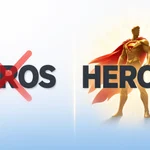
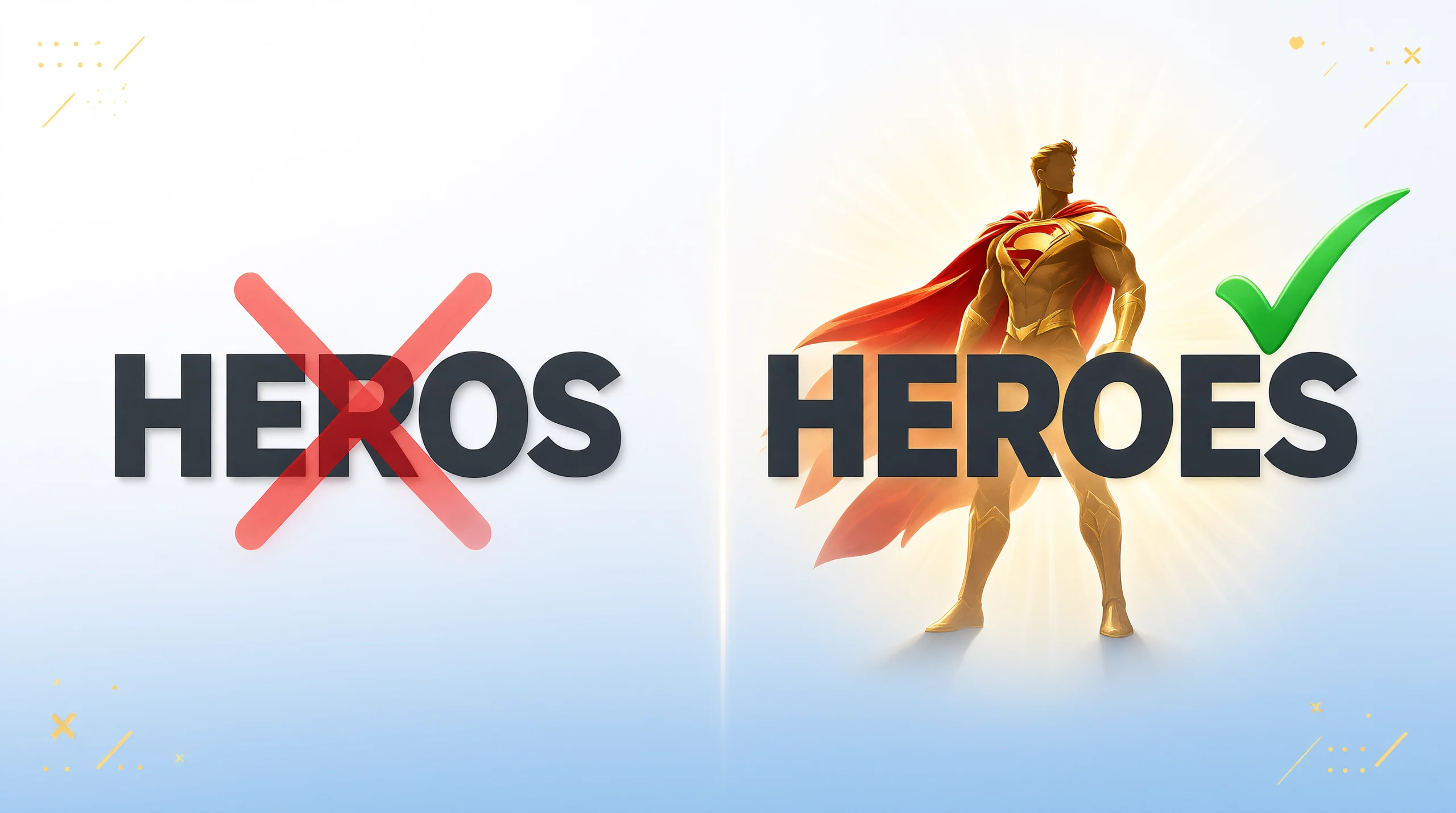
Heroes is the correct plural spelling of hero. Heros is generally considered a spelling mistake when referring to more than one hero. For example, “The firefighters are heroes” is correct. The word hero changes to heroes by adding -es, following a common English spelling pattern for nouns ending in consonant + o.
Why Do People Confuse Heros and Heroes?
People often confuse heros and heroes because English plural spelling rules are not always consistent. Many nouns become plural by adding only -s, such as book → books and car → cars.
However, some nouns ending in o take -es instead. Since hero belongs to this group in standard English, its plural form is heroes.
Another reason for the confusion is pronunciation. Both spellings may be read similarly by someone unfamiliar with the correct spelling, but only heroes is the standard plural of hero.
First Word: Heros
Heros is generally an incorrect spelling of the plural noun hero.
Writers sometimes use it because they assume that adding -s to hero is enough to make it plural. Although that pattern works for many English nouns, it does not produce the standard spelling in this case.
Examples of incorrect usage include:
- The soldiers were brave heros.
- Our teachers are everyday heros.
- The movie celebrates its heros.
In all three sentences, heroes should replace heros.
However, Heros may appear as a proper name, brand, or other specialized name. In those contexts, its spelling depends on the specific name rather than the ordinary plural rule.
Second Word: Heroes
Heroes is the correct plural form of hero. It describes two or more people admired for their courage, achievements, kindness, or extraordinary actions.
A hero might be a firefighter who rescues someone from a burning building, a doctor who saves a patient’s life, or a fictional character who protects others.
Examples:
- The heroes rescued the passengers.
- My parents are my heroes.
- The story follows three heroes on a dangerous journey.
The singular form is hero, while the plural form is heroes.
| Singular | Correct plural | Meaning |
| Hero | Heroes | More than one admired or courageous person |
Heros vs. Heroes: Comparison Table
| Feature | Heros | Heroes |
| Spelling status | Generally incorrect for the plural of hero | Correct standard spelling |
| Singular form | Intended to mean hero | Hero |
| Plural meaning | Not the standard plural | Two or more heroes |
| Standard usage | Avoid in ordinary writing | Use in everyday and formal writing |
| Example | Incorrect: They are heros. | Correct: They are heroes. |
| School assignments | Incorrect for this meaning | Recommended |
| Professional writing | Avoid for this meaning | Recommended |
When Should You Use Heros or Heroes?
The choice is straightforward when you are writing about courageous or admired people.
Use Heroes
Use heroes whenever you mean more than one hero.
Examples:
- The heroes of the war were honored.
- These fictional heroes inspire young readers.
- Nurses and doctors can be everyday heroes.
- The comic book features several superheroes.
Remember that heroes can refer to real people, fictional characters, or anyone admired for exceptional actions.
Use Heros Only in Specialized Names
Use Heros only when it is the established spelling of a proper name or another specific term that genuinely requires it. Do not use it as the ordinary plural of hero.
For example, if a company officially uses Heros as its brand name, preserve that spelling when referring to the company. This does not change the normal plural spelling of hero.
12 Examples of Heros vs. Heroes in Sentences
These examples show how to use heroes correctly in different situations.
- Correct: The firefighters became heroes after rescuing the family.
- Incorrect: The firefighters became heros after rescuing the family.
- Correct: My parents are my greatest heroes.
- Incorrect: My parents are my greatest heros.
- Correct: The movie tells the story of two brave heroes.
- Incorrect: The movie tells the story of two brave heros.
- Correct: Many heroes work quietly without seeking recognition.
- Incorrect: Many heros work quietly without seeking recognition.
- Correct: The children dressed as their favorite superheroes.
- Correct: The heroes protected the village from danger.
- Correct: History remembers people who became heroes through their actions.
- Correct: Every hero in the story faces a difficult challenge, and the heroes learn to work together.
Notice that heroes works naturally in sentences about multiple people, while hero is used when referring to just one person.
Common Mistakes When Writing Heroes
Even confident English speakers sometimes make spelling mistakes with words ending in o. Here are a few errors to avoid.
1. Adding only -s
Incorrect: The story has four heros.
Correct: The story has four heroes.
2. Confusing singular and plural forms
Incorrect: They are a hero.
Correct: They are heroes.
Use a hero for one person and heroes for multiple people.
3. Assuming every word ending in -o follows the same rule
English plural forms vary. For example, photo becomes photos, while hero becomes heroes. It is best to learn the plural form of each word rather than applying one rule to every noun.
4. Repeating the wrong spelling in formal writing
Always check heroes when writing school essays, articles, stories, or professional documents. Correct spelling makes your writing clearer and more credible.
Memory Trick: How to Remember Heroes
Here is an easy way to remember the correct spelling:
Hero + es = Heroes
Think of the phrase “heroes need extra letters.” When hero becomes plural, add -es rather than only -s.
You can also remember this example:
- One hero
- Two heroes
- Three heroes
Read these forms aloud and write them a few times. Repeated practice can help you recognize the correct spelling automatically.
American vs. British English: Is There a Difference?
There is no standard American-versus-British spelling difference between heroes and heros.
Both American English and British English use heroes as the regular plural of hero.
| English variety | Correct spelling | Example |
| American English | Heroes | The heroes saved the town. |
| British English | Heroes | The heroes saved the village. |
Although American and British English differ in the spelling of certain words, such as color and colour, this plural form remains the same in both varieties.
Similar Words That Follow the Same Pattern
Learning related words can help you understand how English plurals work.
| Singular | Plural | Example |
| Potato | Potatoes | We bought fresh potatoes. |
| Tomato | Tomatoes | The tomatoes are ripe. |
| Echo | Echoes | The echoes filled the cave. |
| Hero | Heroes | The heroes received awards. |
| Torpedo | Torpedoes | The documentary discussed historical torpedoes. |
Not every noun ending in o follows this pattern. For example, photo becomes photos, and piano becomes pianos. This is why learning common plural forms individually is useful.
Final Verdict: Heros or Heroes?
The correct spelling is heroes when you are talking about more than one hero.
Heros is not the standard plural form in ordinary English. Whether you are describing brave firefighters, admired family members, historical figures, or fictional characters, use heroes.
Remember the basic rule: one hero, two heroes. Both American and British English follow this spelling.
FAQs:
1. Is heros or heroes correct?
Heroes is correct when referring to more than one hero. Heros is generally a misspelling of the ordinary plural form.
2. What is the plural of hero?
The plural of hero is heroes. For example, “The heroes received medals for their bravery.”
3. Why does hero become heroes instead of heros?
In standard English, hero takes -es to form its plural. This spelling pattern also appears in words such as potato → potatoes and echo → echoes.
4. Is heros ever a correct word?
Heros may be correct as a proper name, brand name, or specialized term with that established spelling. However, it is not the standard plural of hero.
5. Is heroes correct in American and British English?
Yes. Both American and British English use heroes as the plural of hero. There is no regional spelling difference in this word.
6. How do you pronounce heroes?
Heroes is commonly pronounced HEE-rohz, with two syllables. The exact vowel quality may vary slightly by accent.
7. What is the difference between a hero and heroes?
Hero is singular and refers to one admired or courageous person. Heroes is plural and refers to two or more such people.
Remember This
- One: Hero
- More than one: Heroes
- Incorrect as an ordinary plural: Heros
- American English: Heroes
- British English: Heroes
The easiest rule is to remember that the plural of hero ends in -oes, not just -os.
Conclusion
Understanding the difference between heros and heroes is easy once you learn the correct plural spelling. Although adding -s works for many English nouns, hero takes -es in its standard plural form. Therefore, heroes is the correct choice when writing about multiple courageous, admired, or inspiring people. Using the right form will help you avoid common spelling errors in essays, messages, stories, and professional writing.
Keep practicing with simple examples such as “My parents are my heroes” and “The heroes saved the village.” Remember that American and British English use the same spelling, so there is no need to memorize separate regional forms. Whenever you are unsure, think of the simple pattern: one hero, two heroes. With this small spelling rule in mind, you can write confidently and use the word correctly in everyday English.