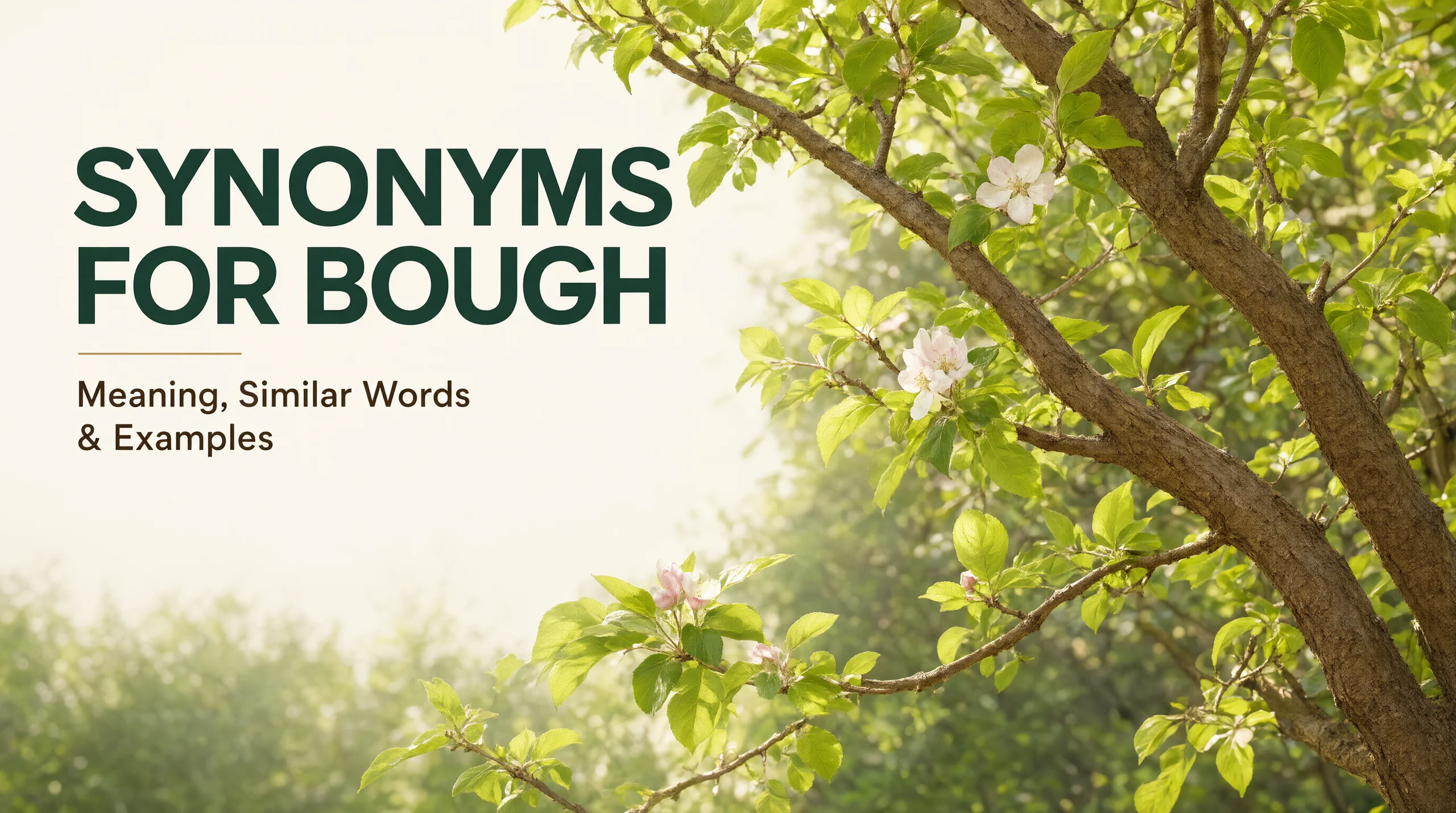
A bough is a large branch of a tree. Common synonyms for bough include branch, limb, tree limb, boughlet, and offshoot, although some words have slightly different meanings and uses. If you are writing a poem, describing nature, improving your vocabulary, or learning English, choosing the right synonym helps you express your ideas clearly. In this guide, you will discover 30 related words, their simple meanings, example sentences, and the contexts in which they work best.
Quick Answer: What Are Synonyms for Bough?
The most useful synonyms for bough are:
- Branch: A part of a tree that grows from its trunk.
- Limb: A large, strong branch of a tree.
- Tree limb: A major woody part growing from the trunk.
- Offshoot: A new branch or growth that develops from something else.
- Boughlet: A small bough or branch, used rarely.
- Sprig: A small stem with leaves or flowers.
- Twig: A small, thin branch.
- Fork: A point where a branch divides into two or more parts.
- Shoot: A new growth emerging from a plant.
- Bough-like limb: A descriptive phrase for a large, spreading branch.
The best everyday replacement for bough is usually branch, while limb is particularly useful when describing a large, sturdy tree branch.
Meaning and Usage of Bough
A bough is one of the main branches of a tree, especially a large or spreading one. The word often appears in descriptions of forests, gardens, and natural scenery, as well as in poetry and literature.
For example:
The children sat beneath a broad oak bough to escape the afternoon sun.
In this sentence, bough refers to a large branch extending from the oak tree.
When Should You Use Bough?
Use bough when you want to describe a substantial tree branch, particularly in a vivid, literary, or nature-focused context.
Examples:
- Everyday description: A heavy bough hung over the garden fence.
- Nature writing: Birds rested on the leafy boughs of an old oak.
- Poetry: Moonlight shimmered through the silent boughs.
- Seasonal description: Snow covered the evergreen boughs.
Although bough and branch are closely related, bough often suggests a larger branch and has a more literary tone.
30 Synonyms for Bough With Meanings and Examples
The following words include direct synonyms, closely related botanical terms, and descriptive alternatives. Their meanings are not always identical, so choose according to the context.
1. Branch
Meaning: A woody part that grows out from a tree trunk or another branch.
Example: A small bird built its nest on a sturdy branch.
Best usage: Everyday conversation, general writing, and descriptions of trees. This is the closest common synonym for bough.
2. Limb
Meaning: A large branch growing from the trunk of a tree.
Example: A storm broke a heavy limb from the old oak.
Best usage: Describing large, strong tree branches, especially in gardening, forestry, and storm-related situations.
3. Tree Limb
Meaning: A substantial woody section extending from a tree’s trunk.
Example: The gardener carefully removed the damaged tree limb.
Best usage: Practical descriptions, gardening instructions, and discussions about tree maintenance.
4. Twig
Meaning: A small, thin branch of a tree or shrub.
Example: The squirrel carried a twig to its nest.
Best usage: Describing delicate branches, small pieces of wood, or materials used by birds to build nests. It is smaller than a typical bough.
5. Sprig
Meaning: A small stem with leaves, flowers, or buds.
Example: She placed a sprig of evergreen beside the candle.
Best usage: Floral arrangements, cooking, gardening, and decorative descriptions. It is related to a bough but is usually much smaller.
6. Shoot
Meaning: A new stem or growth emerging from a plant.
Example: A fresh shoot appeared after the spring rain.
Best usage: Discussing new plant growth, gardening, and botanical development.
7. Offshoot
Meaning: A branch or new growth that develops from a larger structure.
Example: An offshoot extended from the main branch toward the sunlight.
Best usage: Describing secondary growth on plants. It can also refer figuratively to a development originating from something else.
8. Fork
Meaning: A place where a branch divides into separate sections.
Example: The robin perched at the fork of a tree branch.
Best usage: Describing the point where branches split. It is a related term rather than a direct synonym.
9. Spray
Meaning: A small branch or stem bearing several leaves, flowers, or needles.
Example: He decorated the wreath with a spray of pine.
Best usage: Floral design, holiday decorations, and descriptions of small leafy branches.
10. Stem
Meaning: The main supporting structure of a plant that carries leaves, flowers, and buds.
Example: The flower’s stem bent under the weight of its blossom.
Best usage: General plant descriptions. A stem is not necessarily woody or large enough to be called a bough.
11. Limb Branch
Meaning: A descriptive phrase referring to a substantial branch of a tree.
Example: A thick limb branch stretched over the driveway.
Best usage: Informal descriptive writing, although large branch or tree limb sounds more natural in standard English.
12. Boughlet
Meaning: A small bough; an uncommon diminutive form.
Example: A delicate boughlet swayed in the breeze.
Best usage: Rare or creative writing. Most readers will find small branch or twig more familiar.
13. Bough Branch
Meaning: A descriptive phrase emphasizing a large branch.
Example: A broad bough branch provided shade over the path.
Best usage: Occasional descriptive writing, but bough or large branch is usually more natural and concise.
14. Spray of Foliage
Meaning: A small spreading section of leafy growth.
Example: A spray of foliage framed the garden entrance.
Best usage: Decorative descriptions, gardening, and visual writing. This phrase emphasizes the leaves rather than the branch’s size.
15. Evergreen Branch
Meaning: A branch from a tree or shrub that retains its foliage throughout the year.
Example: An evergreen branch rested beside the fireplace.
Best usage: Christmas decorations, wreaths, winter scenery, and descriptions of coniferous trees.
16. Pine Bough
Meaning: A large branch of a pine tree.
Example: A fragrant pine bough hung above the doorway.
Best usage: Descriptions of pine trees, woodland scenery, and seasonal decorations. It is a specific type of bough rather than a general synonym.
17. Fir Branch
Meaning: A branch growing from a fir tree.
Example: Snow rested on every fir branch in the forest.
Best usage: Winter scenes, forest descriptions, and evergreen decorations.
18. Oak Branch
Meaning: A branch of an oak tree.
Example: An oak branch shaded the wooden bench.
Best usage: Describing oak trees in parks, gardens, and natural landscapes.
19. Foliage
Meaning: The leaves of a plant or group of plants.
Example: Dense foliage covered the lower branches.
Best usage: Describing leafy growth or greenery. It does not mean the woody branch itself.
20. Canopy Branch
Meaning: A branch forming part of the upper leafy covering of a tree.
Example: Sunlight filtered through a canopy branch.
Best usage: Forest descriptions and discussions of tree structure. It is a descriptive phrase, not a standard one-word synonym.
21. Upper Branch
Meaning: A branch growing higher up in a tree.
Example: The eagle landed on an upper branch.
Best usage: Explaining the position of a branch or describing wildlife in trees.
22. Lower Branch
Meaning: A branch growing closer to the ground.
Example: The child reached for a lower branch.
Best usage: Everyday descriptions of trees, climbing, and gardening.
23. Main Branch
Meaning: A principal branch growing directly from the trunk or forming a major part of a tree’s structure.
Example: The main branch spread widely over the garden.
Best usage: Describing tree structure and distinguishing major branches from smaller ones.
24. Side Branch
Meaning: A branch that grows from another branch or from the side of a main stem.
Example: A side branch grew toward the open space.
Best usage: Gardening, pruning, and descriptions of branching patterns.
25. Lateral Branch
Meaning: A branch that grows sideways from a main stem or another branch.
Example: The lateral branch produced several new leaves.
Best usage: Botanical writing, plant science, and technical descriptions of tree growth.
26. Bough Limb
Meaning: A descriptive combination referring to a large woody tree branch.
Example: The old bough limb rested above the garden wall.
Best usage: Creative descriptions, although bough or limb alone is more natural in standard English.
27. Branchlet
Meaning: A small branch growing from a larger branch.
Example: Tiny buds appeared on each branchlet.
Best usage: Botanical descriptions and precise writing about the smaller divisions of a tree’s structure.
28. Ramification
Meaning: A branching part or the process of dividing into branches.
Example: The tree’s ramification created an intricate pattern against the sky.
Best usage: Technical, scientific, or literary descriptions of branching structures. It is not a direct everyday replacement for bough.
29. Bifurcation
Meaning: A division into two branches or parts.
Example: The bifurcation of the branch created a natural resting place for the bird.
Best usage: Scientific or technical writing about where a structure divides. It describes a division rather than the branch itself.
30. Woody Branch
Meaning: A hard, wood-covered branch growing from a tree or shrub.
Example: The gardener trimmed the woody branch that blocked the walkway.
Best usage: Describing the physical texture of a branch, especially in gardening and nature writing.
Comparison Table: Which Synonym for Bough Is Best?
| Word | Main meaning | Best context |
| Branch | A part growing from a trunk or another branch | Everyday English |
| Limb | A large tree branch | Large or heavy branches |
| Twig | A small, thin branch | Small branches and nests |
| Sprig | A small leafy or flowering stem | Floral arrangements |
| Shoot | New plant growth | Gardening |
| Offshoot | Secondary growth | Plants and figurative writing |
| Branchlet | A small branch | Botanical descriptions |
| Lateral branch | A sideways-growing branch | Scientific writing |
| Evergreen branch | A branch from an evergreen plant | Seasonal decorations |
| Foliage | Leaves on a plant | Describing greenery |
Best overall choice: Use branch in most everyday situations. Choose limb for a large, sturdy branch and bough when you want a more literary or descriptive tone.
How to Choose the Right Synonym for Bough
The right word depends on the size, appearance, and purpose of your description.
1. Choose by Size
- Large: Bough, limb, tree limb
- Medium or general: Branch, woody branch, main branch
- Small: Twig, branchlet, sprig
For example, write, “A heavy limb broke during the storm,” rather than “A heavy twig broke,” if you are describing a large section of a tree.
2. Choose by Meaning
- A general tree structure: Branch
- A strong, substantial branch: Limb
- A new growth: Shoot or offshoot
- A small leafy section: Sprig or spray
- A branch that divides: Fork or bifurcation
These distinctions make your writing more precise and natural.
3. Choose by Tone
- Simple and conversational: Branch, twig, tree limb
- Descriptive and literary: Bough, leafy bough, spreading branch
- Scientific and technical: Lateral branch, branchlet, ramification
- Decorative and seasonal: Pine bough, fir branch, spray of evergreen
4. Choose by Writing Purpose
For school assignments, branch is usually the clearest choice. In creative writing, bough can create a more vivid picture. In botanical writing, terms such as lateral branch and branchlet can express more specific relationships.
Common Mistakes When Using Synonyms for Bough
Mistake 1: Treating Every Related Word as an Exact Synonym
A twig is much smaller than a bough, while foliage refers to leaves rather than a woody structure.
Better approach: Match the word to the object you are describing.
Mistake 2: Using Bough for Any Plant Stem
A flower stem is not usually called a bough.
Better approach: Use stem for a flower’s supporting structure and bough for a large tree branch.
Mistake 3: Using Technical Terms in Everyday Conversation
Words such as ramification and bifurcation can sound unnecessarily complicated in ordinary descriptions.
Better approach: Use branch, limb, or fork unless a technical distinction matters.
Mistake 4: Confusing a Branch With a Branching Point
A fork is where a branch divides, not the entire branch.
Better approach: Use fork for the division and branch or bough for the woody structure.
Mistake 5: Repeating Unnatural Combinations
Phrases such as bough branch and bough limb are generally redundant.
Better approach: Prefer natural expressions such as large branch, tree limb, or simply bough.
FAQs:
1. What is the closest synonym for bough?
Branch is the closest common synonym. Both describe a woody part growing from a tree, although bough often suggests a larger branch and sounds more literary.
2. What is another word for a large tree branch?
Limb is a common word for a large tree branch. You can also use tree limb, major branch, or large bough, depending on the sentence.
3. Are bough and branch the same thing?
They have very similar meanings, but they are not always interchangeable in tone. Branch is the general everyday word, while bough often refers to a large branch and appears frequently in descriptive or poetic writing.
4. What is the opposite of bough?
There is no exact opposite of bough. Depending on the intended contrast, you might use root to refer to the part of a tree that generally grows underground or trunk to refer to its main central woody structure.
5. What is a small bough called?
A small bough may be called a branchlet or twig. A sprig usually refers to a small stem bearing leaves, flowers, or buds.
6. What is the difference between a bough and a limb?
Both can refer to a large tree branch. Limb is common in everyday and practical descriptions, while bough often sounds more literary or emphasizes a spreading branch.
7. Can I use bough in creative writing?
Yes. Bough is especially useful in poetry, stories, and nature writing because it can create a vivid image of a tree’s large, spreading branches.
Conclusion
The word bough describes a large tree branch and is especially useful in nature writing, poetry, and descriptive passages. Its closest everyday synonym is branch, while limb is a strong alternative when referring to a substantial tree branch. Other related words, including twig, sprig, shoot, offshoot, and branchlet, describe different sizes or types of plant growth.
To choose the best word, consider the size of the branch, the meaning you want to convey, and the tone of your writing. Use simple words for everyday communication and more specialized terms when precision matters. Understanding these distinctions will help you improve your vocabulary and write clearer, more natural English.